
Seriti Engineering Learnership Programme 2026 | Apply for Artisan Training Opportunities

Published: June 2026
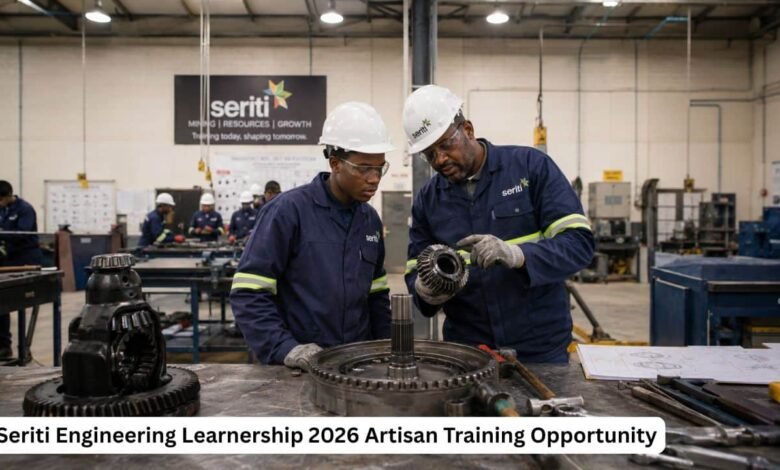
Seriti is inviting applications for its Engineering Learnership Programme 2026 at Middelburg Mine Services in Emalahleni, Mpumalanga. This exciting opportunity is designed for young South Africans who want to develop technical skills and build careers as qualified artisans in the mining and engineering industry.
Successful learners will receive structured workplace training, practical exposure, and technical development in their chosen engineering trade.
Learnership Details
Programme
Engineering Learnership Programme (Section 18.2)
Company
Seriti
Division
Middelburg Mine Services
Location
📍 Emalahleni, Mpumalanga
Reference Number
MMS051/26GS
Closing Date
📅 12 June 2026
Available Trades
Applicants can apply for one of the following trades:
🔧 Auto Electrician
🔧 Boilermaker
🔧 Diesel Mechanic
🔧 Fitter
🔧 Rigger
Applicants must clearly indicate their preferred trade when submitting their application.
Minimum Requirements
Applicants must meet one of the following requirements:
Option 1
✅ Grade 12
✅ Mathematics (not Mathematical Literacy)
✅ Physical Science
✅ Minimum 40% in required subjects
✅ Two relevant N2 trade-related subjects
Option 2
✅ N2 Qualification
✅ Four relevant trade-related subjects
Trade-Specific Subject Requirements
Auto Electrician
- Mathematics
- Engineering Science
- Industrial Electronics
- Electrical Trade Theory
Boilermaker
- Mathematics
- Engineering Science
- Plating and Structural Steel Drawing
- Plater Trade Theory
Diesel Mechanic
- Mathematics
- Engineering Science
- Engineering Drawing
- Diesel or Motor Trade Theory
Fitter
- Mathematics
- Engineering Science
- Engineering Drawing
- Fitting and Machining Theory
Rigger
- Mathematics
- Engineering Science
- Engineering Drawing
- Mechanotechnology
Additional Requirements
Applicants must:
✅ Be willing to undergo psychometric assessments
✅ Be willing to work shifts
✅ Be available for standby duties and call-outs
✅ Have good problem-solving skills
✅ Be medically fit or able to obtain a Certificate of Fitness
✅ Possess a valid K53 Driver’s Licence
✅ Have a clear criminal record
What You Will Learn
Depending on the selected trade, learners may gain experience in:
- Equipment maintenance
- Mechanical and electrical systems
- Fault finding and diagnostics
- Welding and fabrication
- Rigging operations
- Preventative maintenance
- Workplace safety procedures
- Mining and engineering operations
Required Documents
Applicants must submit:
- Updated CV
- Certified copy of South African ID
- Certified copies of qualifications
- Certified copy of driver’s licence
- Proof of residence
⚠️ All documents must be certified within three months before submission.
Advantageous Experience
The following may strengthen your application:
- Previous mining industry exposure
- Engineering-related practical experience
- Technical knowledge relevant to the chosen trade
Why Apply for a Seriti Learnership?
Benefits include:
✅ Practical workplace training
✅ Exposure to the mining industry
✅ Technical skills development
✅ Learning from experienced artisans
✅ Improved employability
✅ Potential pathway to a long-term artisan career
How to Apply
Interested candidates should submit their applications through the official Seriti recruitment portal before the closing date.
Application Tips
- Ensure all documents are certified and clear
- Verify that your qualifications match the trade requirements
- Clearly indicate your chosen trade
- Ensure contact details are accurate
- Apply before the closing date
Important Information
⚠️ Incomplete applications may not be considered.
⚠️ Only shortlisted candidates may be contacted.
⚠️ Employment Equity principles may apply.
⚠️ Preference may be given to local host community candidates where applicable.
Final Thoughts
If you’re interested in becoming a qualified artisan and building a career in mining and engineering, the Seriti Engineering Learnership Programme 2026 offers an excellent opportunity to gain valuable technical skills and workplace experience.
Apply before 12 June 2026 and take the first step toward a rewarding engineering career.
Apply Here
Skhumbuzo Shandu is the founder of Careers With Shandu, a platform dedicated to helping South Africans access job opportunities, learnerships, and career development resources.
He focuses on sharing clear, practical, and up-to-date information to help matriculants, graduates, and job seekers navigate applications and build their careers.
Through his work, he aims to make opportunities easier to understand and accessible to everyone, especially young people entering the workforce.